
Each second, Google processes an incredible volume of questions. As per Google, there are more than 5 trillion search queries that are processed by the giant each year. It means around 158,000 queries per second. At some point of time, among all the questions going through the system, there will be your customers whom you try to find and engage, and most probably, they won’t know your brand because someone else was faster than you and answered the customer’s question first. It is the magic of SEO and digital marketing. Being louder and better than your competitors is not what really counts in SEO and digital marketing.
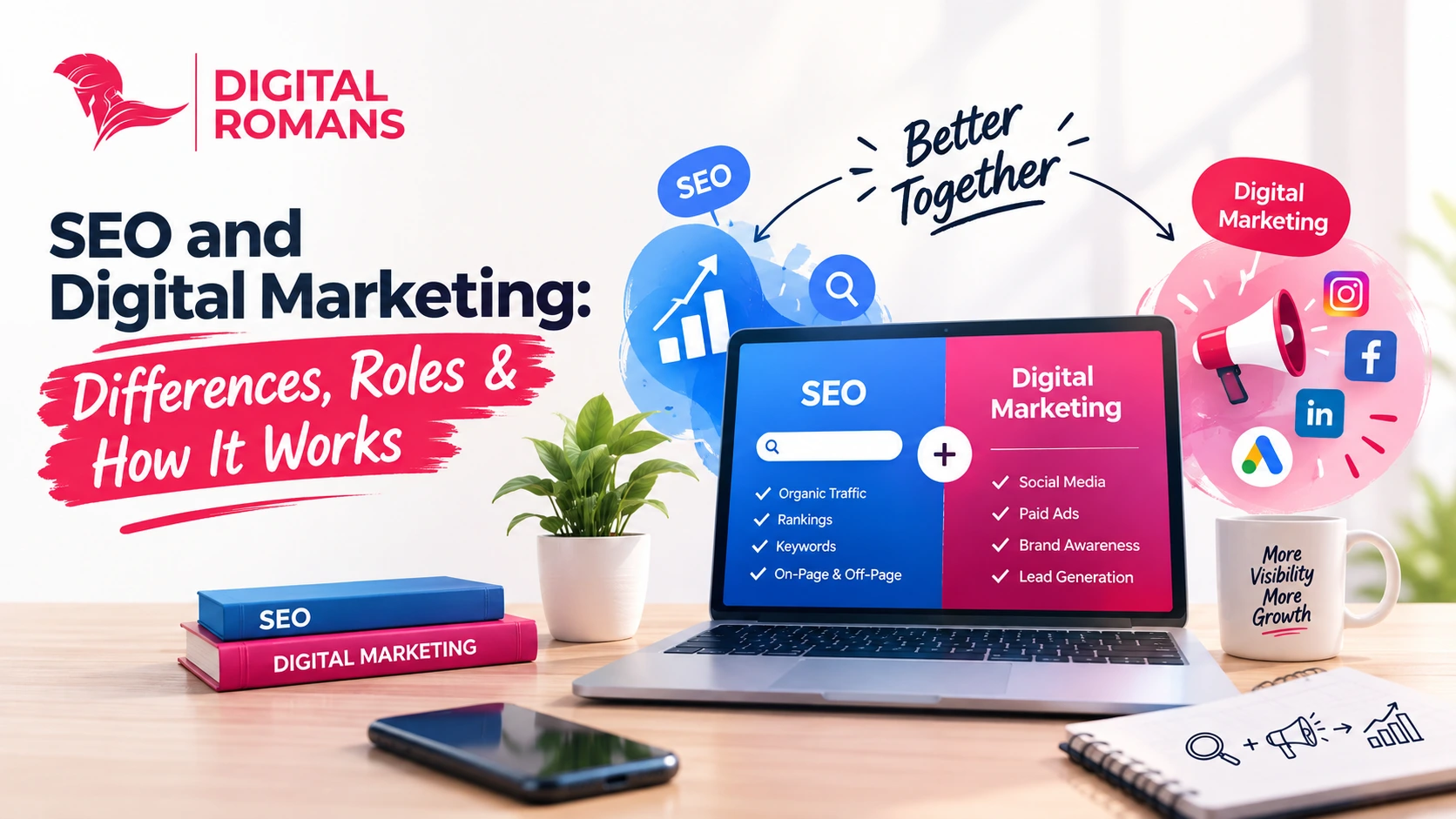
This is the guide where we explain what SEO and digital marketing are, how they can complement each other and how they really work now.
Table of Contents
ToggleQuick Answer
- Digital marketing = all online promotion: SEO, paid ads, social media, email, content, influencers and more.
- SEO = improving your website so it ranks higher in unpaid Google results.
- Relationship: SEO is a channel inside digital marketing.
- “Online marketing” and “internet marketing” are usually other names for digital marketing, so “online marketing and SEO” follows the same relationship.
What Is Digital Marketing?
Digital marketing means promoting a product, service or brand through digital channels such as search engines, websites, social platforms, email, messaging apps and online ads. Its goal is to reach the right people, build trust and turn attention into enquiries, sales and repeat customers.
The main channels are:
- SEO:earning organic rankings on Google and other search engines
- Paid search (PPC): paying for ads on search results, such as Google Ads
- Social media marketing: organic and paid activity on Instagram, LinkedIn, Facebook, YouTube and X
- Content marketing: blogs, videos, guides and tools that attract and educate buyers
- Email and WhatsApp marketing: direct communication with leads and customers
- Influencer and affiliate marketing: promotion through creators and partners
- Analytics and CRO: measuring results and improving conversions
A digital marketer’s job is to choose the right mix of these channels for a business goal and budget.
What Is SEO?
SEO(Search Engine Optimization) is the work of making your website easy for search engines to find, understand and trust, so it appears when people search for what you offer. It has four main parts:
- On-page SEO: page titles, headings, content quality, keyword targeting, internal links and images.
- Technical SEO: site speed, mobile-friendliness, crawlability, indexing, structured data and fixing duplicate or broken pages.
- Off-page SEO: backlinks from trusted sites, brand mentions and online reputation.
- Local SEO: Google Business Profile, reviews, local listings and location-based keywords, important for clinics, restaurants, coaching centres and service businesses.
Good SEO helps both search engines and real visitors, because fast, clear and useful pages are better for everyone.
Know About:- SEO Cost in India: Complete SEO Pricing Guide (2026)
Is SEO Part of Digital Marketing?
Yes. SEO is one of the core channels of digital marketing, in the same way PPC, social media and email are. When an agency offers “digital marketing services”, SEO is normally one of them. When someone says “SEO services”, they mean only the search optimization work.
A simple way to remember it: digital marketing is the whole toolbox, and SEO is one of the tools.
Scope. SEO answers one question: “How do we get found in search?” Digital marketing asks a bigger one: “How do we reach, convince and keep customers online?”
Cost. Organic clicks are not charged, but SEO is not free. You invest in content, technical work, tools and expert time. Digital marketing adds ad spend and creative costs on top.
Speed. A PPC campaign can send visitors the same week you launch it. SEO builds gradually, and the timeline depends on your competition, your site’s current quality and how consistently you publish and improve.
How SEO and Digital Marketing Work Together
The two are strongest as a team. Here is how SEO connects to each channel.
SEO and content marketing. Content gives SEO something to rank. A guide on “how to choose a home loan” can attract people searching that exact question, while SEO makes sure the page matches search intent and loads well.
SEO and PPC. Paid search shows you which keywords actually produce enquiries within days. You can then build organic pages around the keywords that convert. In the other direction, SEO data shows which searches you already rank for, so you can avoid paying for clicks you may get free.
SEO and social media. Social shares are not a direct ranking factor, but social platforms help content reach people, which can lead to visits, branded searches and backlinks.
SEO and email or WhatsApp. SEO brings in new visitors, and email or WhatsApp brings them back. Placing a sign-up form on your best-ranking pages turns anonymous traffic into a reachable audience.
SEO and analytics. Google Search Console and GA4 show what people search, which pages they land on and where they leave. This helps improve ads, social posts and website design too.
SEO and AI search. More people now see AI-generated summaries in search, and sources shown in them tend to be clear, trustworthy and well-structured pages. Strong SEO basics such as helpful content, accurate information, author credibility and clean site structure support visibility here too. Treat AI search as an extension of good SEO rather than a replacement.
Example. Imagine a dental clinic in Gurugram. Local SEO gets the clinic into “dentist near me” results. Google Ads brings immediate enquiries for “teeth whitening”. Instagram reels build trust, and WhatsApp reminders bring patients back. Each channel does a different job, and the data from one improves the others. That combined approach is what people mean by SEO and digital marketing working together.
SEO Specialist vs Digital Marketer
An SEO specialist focuses on search performance. Typical tasks include keyword research, site audits, on-page optimization, fixing technical errors, content briefs and link building.
A digital marketer manages the broader plan. Typical tasks include choosing channels, setting budgets, running campaigns, tracking leads and reporting on revenue.
For careers, many people begin with SEO because it teaches how customers search and how content gets found, then add PPC, social and analytics. For hiring, a small business can start with one all-round digital marketer, while a business in a crowded search market may need a dedicated SEO specialist as well.
Which One Does Your Business Need?
Start with SEO if:
- Your customers search Google before buying (services, local businesses, education, healthcare, B2B)
- You want lasting traffic and can be patient
- You have a limited ad budget but can invest in content and website quality
Start with wider digital marketing if:
- You are launching a new product and need quick visibility
- Your customers discover brands mostly on social media
- You need leads quickly and can fund paid campaigns
Use both if you want steady growth. Paid and social channels can bring early results, while SEO builds a lasting base.
A practical 90-day approach for a small business:
- Month 1: Fix the basics. Check the website’s speed and mobile view, set up Google Business Profile, Search Console and GA4, and list the 10 to 15 searches your customers use.
- Month 2: Improve or create pages for those searches. Start a small PPC test on your best commercial keywords and begin collecting leads by form or WhatsApp.
- Month 3: Review the data. Double down on the keywords and channels that bring real enquiries, and publish more content around them.
Common Mistakes to Avoid
- Treating SEO as a one-time setup instead of ongoing work
- Running ads to a slow or confusing website
- Measuring traffic only, without tracking calls, forms and sales
- Using different messages on every channel
- Buying cheap backlinks, which can hurt trust and rankings
- Expecting SEO to work in a few weeks, then quitting early
Metrics That Show It Is Working
Remember that impressions without clicks usually point to low rankings or a weak match with search intent, not just a weak title.
Why Choose Digital Romans?
Digital marketing without appropriate digital strategy doesn’t prove to be much beneficial. If you want to know more about any of these strategies, feel free to connect with us.
And, if you really wish to win the digital marketing game, then come, and join us to conquer the market together! The action-oriented nature of Digital Romans makes us one of the most effective digital marketing agencies.
Conclusion
SEO and digital marketing are not rivals. SEO is a powerful channel inside the larger digital marketing system. Use SEO to be found by people already searching for you, use other channels to reach people faster or earlier in their journey, and connect the data from all of them. That combination usually gives better and more reliable growth than relying on any single channel.
Frequently asked questions
Is SEO the same as digital marketing?
No. SEO is one part of digital marketing. Digital marketing also includes paid ads, social media, email, content marketing and more.
Is SEO part of digital marketing?
Yes. SEO is the organic search channel within the wider digital marketing mix.
What is the difference between SEO and digital marketing?
SEO focuses only on ranking in search engines. Digital marketing covers every online channel used to reach and convert customers.
Which is better, SEO or digital marketing?
They are not alternatives. SEO is a channel and digital marketing is the full strategy. Choose channels based on your goals, customers and budget.
Can I do digital marketing without SEO?
Yes, using paid ads and social media, but you will pay for most visits. SEO adds long-term visibility that does not charge per click.
Are "online marketing" and "digital marketing" the same?
In everyday use, yes. Online marketing, internet marketing and digital marketing are generally used interchangeably.
Is SEO free?
Organic clicks are not charged by Google, but SEO needs time, content, tools and expertise, so it has a cost.
How long does SEO take to show results?
It depends on competition, website quality and consistency. Many sites need several months before seeing meaningful movement.
How do SEO and PPC work together?
PPC gives fast keyword data, and SEO builds lasting organic rankings for the keywords that prove valuable. Together they can cover more of the search results.
Does social media help SEO?
Not directly as a ranking factor, but it can increase visibility, traffic and brand searches, which support SEO indirectly.
Should I learn SEO or digital marketing first?
SEO is a good starting point because it teaches how search and content work. Then add PPC, social media, email and analytics.
Does AI search replace SEO?
No. AI-generated answers still draw on web content, so clear, trustworthy and well-organized pages remain important.

